Shot Kit: Natural-Light Hospitality Photography
A look inside the core gear I carry for architectural hospitality shoots where natural light, efficiency, and reliability drive the workflow.
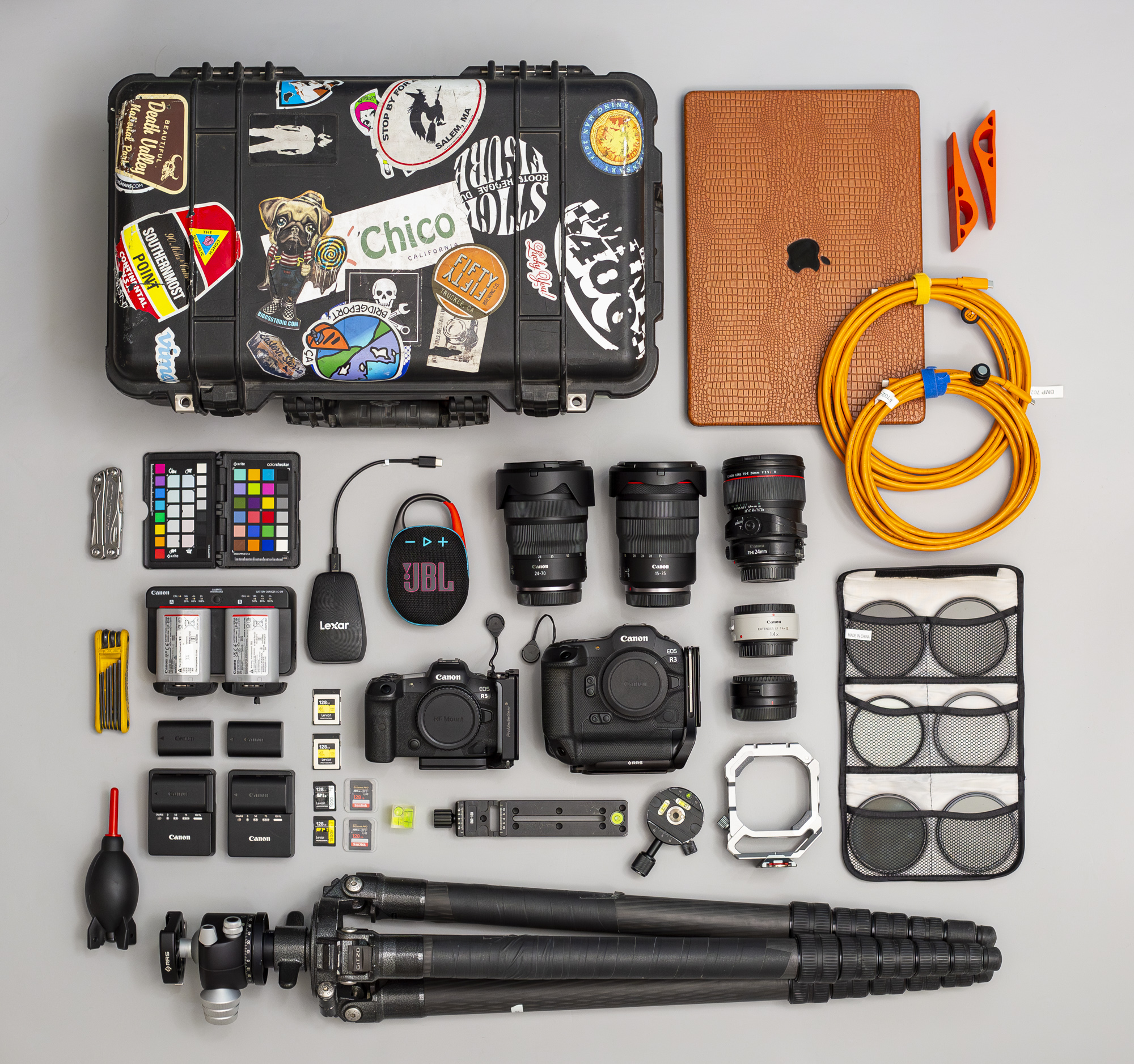
Most of my hospitality work takes place inside active hotels, where staying mobile and working efficiently matters just as much as image quality. This is the core kit I travel with for architectural assignments, built around reliability, precision, and making the most of natural light already present in the space.
Because we’re almost always working inside operating properties, staying nimble matters. Hotels don’t pause operations for photography. Rooms turn over, staff move through spaces, and lighting conditions shift throughout the day. Traveling with a compact but highly capable kit allows me to move efficiently while still maintaining the level of precision these spaces require. The layflat image here shows the core equipment I typically carry for a hospitality-focused architectural shoot. I don’t necessarily use every piece of this kit on every job, but everything comes with me. Redundancy is intentional. Extra batteries, memory cards, cables, and at least one additional camera body are standard. Technical hiccups happen, and I never want them to interrupt a production day or compromise results.
Pelican 1510 Case
This is my default architectural camera bag. With the TrekPak divider system, everything has a defined place and nothing takes up more room than it needs to. It’s small enough to move easily through hotels but tough enough for constant air travel. It also regularly doubles as a stool or a makeshift apple box when needed. Easily one of the most useful pieces of gear I own.
16-inch MacBook Pro
A core production tool for tethered capture, reviewing images at full resolution, and managing files on the road. Tethering isn’t just for client review, it’s for my own workflow as well. Looking at images on the back of the camera makes it easy to miss small details. Working tethered allows me to check focus, composition, and technical issues as the image is being built.
Doorstops
Cheap, simple, and used constantly. These stackable rubber doorstops help control doors, props, and airflow. The bright color makes them easy to spot if they get left behind and easier to retouch out if they accidentally end up in frame.
Tether Tools Cables
I always carry at least two, usually more, and they’re all fitted with jerk stops. Reliable tethering is essential to how I work, and cheap cables simply aren’t worth the risk.
Leatherman Wingman
Both a production tool and an everyday carry item. Pliers, a blade, and screwdrivers solve a surprising number of small problems on set. Durable, practical, and relatively replaceable, which matters when you realize it’s still in your pocket at the TSA checkpoint.
X-Rite Passport Color Checker
I mostly rely on the grayscale targets, but the full chart is there when needed. It’s slim, protected, and easy to carry throughout the day. I shoot it consistently to maintain accurate color, especially in spaces where designers care deeply about materials and finishes.
Lexar CFast Card Reader
A necessary backup when tethering isn’t an option. Fast, simple, and dependable.
JBL Clip Bluetooth Speaker
Long days are better with music. It helps keep energy and focus up when moving room to room for hours at a time.
Canon 24–70mm f/2.8
A true workhorse. While I enjoy using prime lenses, traveling and working on tight schedules often calls for flexibility. This lens handles tighter compositions, details, and general coverage very well.
Canon 15–35mm f/2.8
I try not to go wider than necessary, but some spaces demand it. This lens gives me the extra range without sacrificing image quality.
Canon 24mm TS-E
Still one of the most important tools in my architectural kit. Being able to shift perspective optically instead of correcting in post preserves quality and precision. It’s often the first lens I reach for before switching to a zoom.
Canon 1.4x Extender and EF to RF Adapter
Both exist primarily to keep the tilt-shift lens working within my current system.
Rogeti TS-E Frame
A specialized bracket that allows the camera to be mounted by the lens instead of the body. It enables extremely precise stitched panoramas without changing perspective. I don’t use it often, but when I need it, it’s invaluable.
Tiffen ND Filters and Adapter Rings
Used primarily to introduce motion blur in brighter conditions without sacrificing depth of field. Adapter rings allow one filter set to work across multiple lenses.
Allen Wrench Set
Travel loosens things. This keeps tripods, brackets, and accessories properly tightened.
Extra Batteries and Chargers
Tethered shooting drains batteries quickly. Carrying more than I expect to need is intentional.
Memory Cards
Rarely used when tethered, but essential when needed. Redundancy is the theme.
Bubble Level
Mostly unnecessary these days, but small enough to keep around and occasionally helpful.
Canon R5
My primary architectural camera. High resolution, manageable files, and a compact body make it ideal for this kind of work. It’s fitted with a ProMedia L-bracket for quick orientation changes and clean tethering.
Canon R3
Not my first choice for architecture, but incredibly useful when speed, low light, or limited dusk conditions require a second angle.
Panoramic Rail and 360-Degree Mount
Used when a single frame just isn’t enough. Proper rotation around the lens’s nodal point keeps stitched images clean and distortion-free.
Rocket Blower
Clean sensors make for happier retouchers.
Gitzo Carbon Fiber Tripod
A long-term investment and a critical piece of the kit. Lightweight enough to travel with but stable enough for demanding architectural work. Paired with a Really Right Stuff ball head, it’s something I don’t compromise on.
The Takeaway
This kit isn’t about carrying everything I own. It’s about traveling with the tools that allow me to work calmly, consistently, and with precision inside active hospitality environments.
The goal is always the same: move efficiently through the property, respect the architecture and natural light, and deliver images that feel intentional rather than forced.
Lighting and grip gear live in a separate kit and come into play when the scope of a project calls for it. I’ll cover that setup in a future post.
For now, this is the core bag that comes with me on almost every hospitality-focused architectural assignment.