Behind the Scenes: Photographing Immersive Home Audio Solutions
Balancing dark environments, reflective surfaces, and hidden technology to create a clear and usable image set
Showroom photography often looks straightforward in the final images. Clean compositions, controlled lighting, and clearly presented products. What those images don’t show is how much problem-solving goes into making a complex environment read simply.
For this shoot with Immersive Home Audio Solutions, the goal was to photograph their entire Las Vegas showroom, a space designed to demonstrate multiple home audio configurations and installation approaches.
Unlike a single, controlled environment, the showroom featured a variety of setups. Different seating areas, speaker placements, and room layouts, all designed to showcase how audio systems integrate into real living spaces.
The challenge wasn’t just documenting the space. It was making each system legible.
When the product is meant to disappear, the photography still has to explain it.
A Challenging Environment
The showroom presented a difficult balance.
Dark interiors designed for media viewing, paired with lighter furniture and reflective surfaces that react quickly to light. Pushing exposure too far flattens the space. Holding it back too much loses detail where it matters.
Every composition required careful control. Light needed to be introduced selectively, shaping the space without breaking the intended mood of the environment.
Unlike natural-light work, this was a fully controlled lighting setup from start to finish.
Lighting for Clarity
All images were built using strobe lighting.
The goal wasn’t just to illuminate the space, but to define it. Highlight seating areas, control reflections, and separate elements within the frame so the viewer can understand what they’re looking at.
That becomes especially important in darker environments where details can easily collapse into shadow.
Each setup required multiple adjustments. Small shifts in light position, power, and direction to maintain consistency while adapting to each room’s layout.
Photographing Hidden Systems
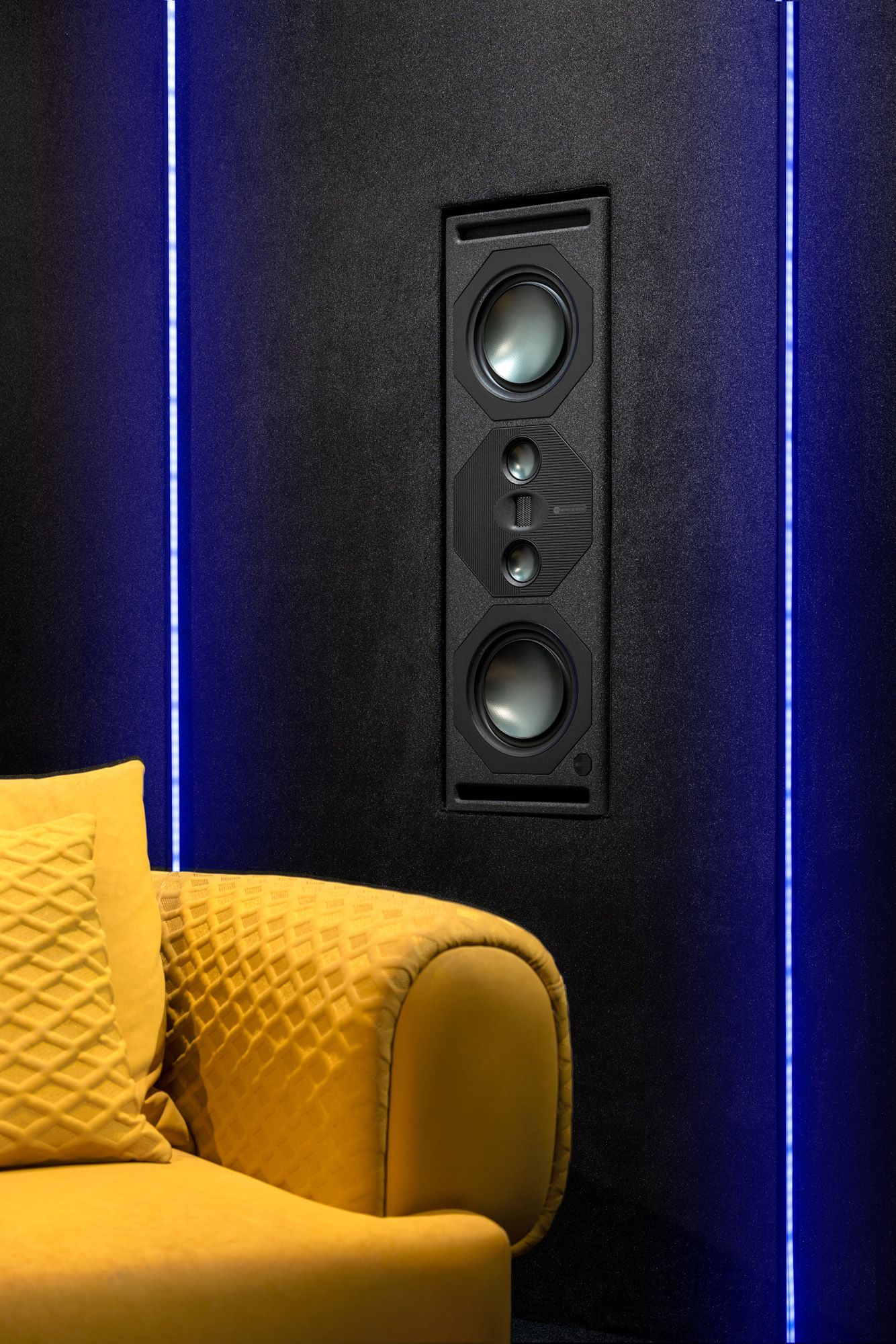
One of the more nuanced challenges was capturing systems designed not to be seen.
Inset speakers, in-wall installations, and stealth audio systems are intended to blend into the architecture. In person, that subtlety works. On camera, it can disappear entirely.
The approach here was to reveal just enough.
Using light, angle, and composition to subtly define where these systems exist without overemphasizing them or disrupting the design of the space.
It’s a balance between visibility and restraint.
Working Tethered
The entire shoot was done tethered to a laptop.
This allowed for immediate review of each frame, which was critical given the complexity of the lighting and the subtlety of the subject matter. Small issues, reflections, uneven highlights, or areas falling off too quickly, could be identified and corrected in real time.
When you’re building images this deliberately, working without that feedback loop introduces unnecessary risk.
A Small, Focused Team
The production was intentionally minimal.
Working with a single assistant allowed the shoot to stay efficient and controlled. Lighting adjustments, set refinement, and workflow all stayed tight without overcomplicating the environment.
In a showroom setting, that matters. Too much equipment or too many people can quickly interfere with the space itself.
A Different Visual Language
This project required a different approach than most of my work.
Darker tones, more controlled highlights, and a more dramatic use of light. The images needed to feel intentional and refined, but also aligned with the experience of the showroom itself.
The result is a set of images that stand apart visually while still serving a clear purpose.
The Goal: Clarity
Across the entire shoot, the objective was consistency and clarity.
Seventeen unique images, each representing a different system or configuration, but all working together as a cohesive set. The images needed to be informative without feeling technical, and polished without losing the atmosphere of the space.
When dealing with complex products, simplicity in the final image is usually the result of a more involved process behind the scenes.
Summary
Not every environment is built to be photographed easily.
Dark spaces, reflective materials, and hidden technology all introduce challenges that require a more controlled approach. Lighting becomes more deliberate. Composition becomes more precise.
When those elements are handled well, the final images feel clear and effortless.
Even if the process behind them is anything but.